


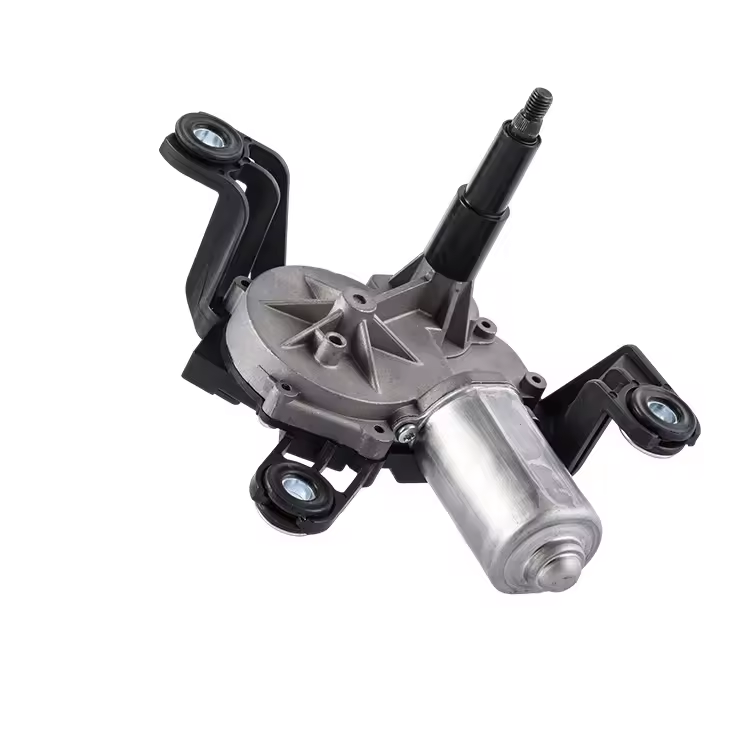


How to Choose a Reliable Wiper Motor Manufacturer in China: 6 Checks Before You Order
Why China for Wiper Motors?
China accounts for a large share of global aftermarket automotive electrical production, supported by a deep supply chain of motor components — copper wire, carbon brushes, rare-earth magnets, precision-cast housings, and circuit boards — that has been refined over decades.
The better manufacturers in this sector have invested heavily in quality management infrastructure: IATF 16949 certification, in-house dynamometer test rigs, automated end-of-line functional testers, and traceability systems that support PPAP documentation for OEM supply chains. The challenge for importers is identifying these suppliers reliably before committing capital.
Check 1: Verify Active IATF 16949 Certification
IATF 16949 (the current version replaced ISO/TS 16949 in 2016) is the automotive industry's quality management standard. It requires manufacturers to document and control every process step, maintain traceability records, and conduct regular internal audits. For Wiper Motors specifically, it mandates FMEA studies of failure modes in the armature winding, brush gear, and gearbox.
How to verify: Ask for the current IATF 16949 certificate with the certification body name and certificate number. Cross-check the certificate on the IATF's public certification database at iatfglobaloversight.org. Certificates expire every three years and must be re-audited; an expired certificate is meaningless.
Red flag: Suppliers who show you an ISO 9001 certificate when you ask for IATF 16949. ISO 9001 is a generic quality standard with far lower requirements for automotive production. It is not an acceptable substitute for safety-critical components.
Check 2: Confirm 100% End-of-Line Functional Testing
Mass-produced wiper motors must pass a functional test on a dedicated test rig before packaging. This test should verify: no-load current draw at low and high speed, stall torque at rated voltage, park-position switching accuracy, and brush contact resistance. Statistical sampling is insufficient for safety-critical components — ask specifically for 100% per-unit testing.
How to verify: Request a copy of the test rig specification or a short video of the end-of-line test process. A manufacturer who performs 100% testing will readily show you this — it is a selling point, not a secret.
Red flag: Any answer that mentions "sampling" or "AQL inspection" as the primary quality gate for functional testing. AQL sampling is appropriate for cosmetic checks; it is not a substitute for 100% electrical and mechanical testing on safety-critical parts.
Check 3: Demand OEM Cross-Reference Documentation
A wiper motor sold as a replacement for a specific vehicle must cross-reference the OEM part number accurately. This is not merely a matter of physical fitment — it also covers connector pin layout, sweep speed calibration, park-position switch voltage thresholds, and motor torque output. A part that fits physically but produces the wrong sweep speed will generate warranty returns.
How to verify: Provide your target OEM number (e.g., Bosch 0 390 241 318, Valeo 403 765, or a vehicle-specific OE number) and ask the supplier to confirm fitment with documented evidence. A reliable manufacturer will have a cross-reference database mapping their internal SKU to OEM references from Bosch, Valeo, Mitsuba, Denso, and vehicle OEs. They should be able to provide a specification sheet confirming voltage, current draw, and sweep speed for each OEM reference.
Red flag: Suppliers who confirm fitment based solely on physical dimensions or photos, with no reference to electrical specifications.
Check 4: Check CE Certification for European Market Import
If you are importing wiper motors into the European Union, European Economic Area, or UK, CE marking is a legal requirement under the Machinery Directive (2006/42/EC) and Low Voltage Directive (2014/35/EU). Without valid CE certification, your products cannot legally enter EU/EEA markets and may be seized at customs.
How to verify: Ask for the CE Declaration of Conformity (DoC) document, which should name the specific product categories covered, the directives applied, the technical standards used (typically EN ISO 12100 for safety, EN 60335 for electrical appliances), and the authorised signatory. For motor products, the DoC should have been compiled with the involvement of a Notified Body if the self-assessment route is not available.
Red flag: A CE "certificate" issued by a Chinese testing lab rather than a proper Declaration of Conformity. CE marking is self-declared by the manufacturer against technical standards — a Chinese lab stamp is not a CE certificate.
Check 5: Evaluate Production Scale and Inventory Readiness
A manufacturer with meaningful production capacity holds buffer stock of its most common SKUs, can honour rolling purchase orders without long lead times, and has the process stability to maintain consistent quality across batches. A trader or small workshop masquerading as a manufacturer will struggle on all three dimensions.
What to look for:
- Facility size: a credible wiper motor manufacturer should have at minimum 5,000 m² of production floor space dedicated to motor assembly and testing.
- Monthly output: for a supplier serving international wholesale customers, monthly capacity of at least 20,000–30,000 units across the product range is a reasonable baseline.
- SKU depth: a 500+ SKU catalogue across multiple vehicle brands suggests real engineering investment in cross-referencing. A supplier with 20 SKUs is likely a small workshop, not a manufacturer.
- Inventory: ask whether the most common SKUs are held in finished-goods stock, and what the typical lead time is for in-stock versus made-to-order parts.
JX Automotive, for reference, operates a 15,000 m² facility in Zhejiang with over 70 employees, a monthly capacity exceeding 50,000 units, and a catalogue of 1,000+ SKUs — figures that can be verified by factory audit.
Check 6: Clarify Warranty Terms and After-Sales Process
A one-year warranty is standard in the automotive aftermarket. But the critical questions are: what does the warranty actually cover, how does the returns process work, and how responsive is the supplier's after-sales team?
Questions to ask:
- Does the warranty cover only manufacturing defects, or also shipping damage?
- What documentation is required to make a warranty claim (photos, failed part return, test report)?
- What is the supplier's typical response time to a warranty enquiry?
- Is replacement stock dispatched before or after the defective unit is returned?
A manufacturer who has genuinely invested in quality will be confident about their warranty process because their claim rate is low. Vague or evasive answers about after-sales terms are a reliable warning sign.
Putting It All Together: A Supplier Scorecard
Use these six checks as a simple scorecard before your first order:
| Check | Pass Criteria |
| IATF 16949 | Active certificate, verifiable online |
| 100% functional testing | Video or process evidence available |
| OEM cross-reference | Specification sheet with electrical data |
| CE certification | Valid Declaration of Conformity |
| Production scale | ≥5,000 m², ≥500 SKUs, monthly capacity stated |
| Warranty terms | 12 months, clear claims process, responsive team |
A supplier who scores 6/6 on this scorecard is worth progressing to sampling and audit. A supplier who scores fewer than 4/6 carries meaningful supply risk for safety-critical components.
Why JX Automotive Passes All Six Checks
Founded in 1990, JX Automotive (Zhejiang Jixiang Auto Parts Co., Ltd.) has spent over three decades building the quality infrastructure that these checks are designed to find:
IATF 16949 (2018)
- and
CE (2019)
certified, with ISO/TS 16949 (2011) history
100% pre-shipment functional inspection
- on every unit leaving our 15,000 m² Zhejiang facility
1,000+ SKU catalogue
- covering 12 V and 24 V applications across European, Asian, and US-market vehicles, with full OEM cross-reference documentation
50,000+ units/month
- production capacity with stable, auditable processes
12-month warranty
- with a responsive after-sales team and clear claims procedure
Ships from Shanghai / Ningbo
- within 20–40 days; T/T, L/C, Western Union, and PayPal accepted
We welcome factory audits and sample orders. Contact us with your OEM part numbers and target vehicle list to receive a tailored quotation.
Frequently Asked Questions
Q: Can I visit the factory before placing an order? A: Yes. JX Automotive welcomes pre-order factory visits at our facility in Zhejiang. For buyers who cannot travel, we offer video audit sessions covering the production line, test rigs, and certification documentation.
Q: What is the minimum order quantity (MOQ)? A: MOQ varies by SKU. For common European-market part numbers, we typically hold finished stock and can accommodate smaller first orders for sampling purposes. Contact us with your specific OEM references for accurate MOQ and pricing.
Q: How do I confirm that a part fits my vehicle before ordering? A: Provide your vehicle make, model, year, and the OEM part number from your existing motor (usually stamped on the motor housing). Our technical team will confirm fitment and provide a datasheet before you commit to an order.
Q: Do you supply OEM documentation (PPAP, FMEA) for quality approval processes? A: Yes. We maintain PPAP documentation and FMEA records for our core SKUs and can provide these on request for buyers with formal supplier qualification requirements.
Q: What certifications do you hold? A: IATF 16949 (2018), CE (2019), and ISO/TS 16949 (2011). Certificate copies are available on request.
Internal Link Suggestions
- Link "1,000+ SKU catalogue" →
/wiper-motor/
category page
- Link "OEM part numbers" in CTA → contact or enquiry page
- Link "Zhejiang facility" → company about/profile page