


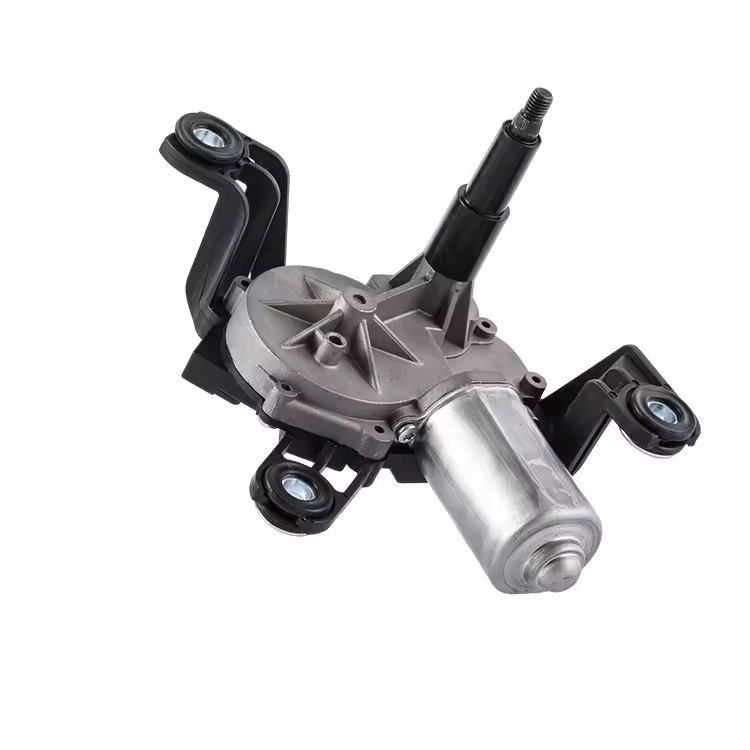


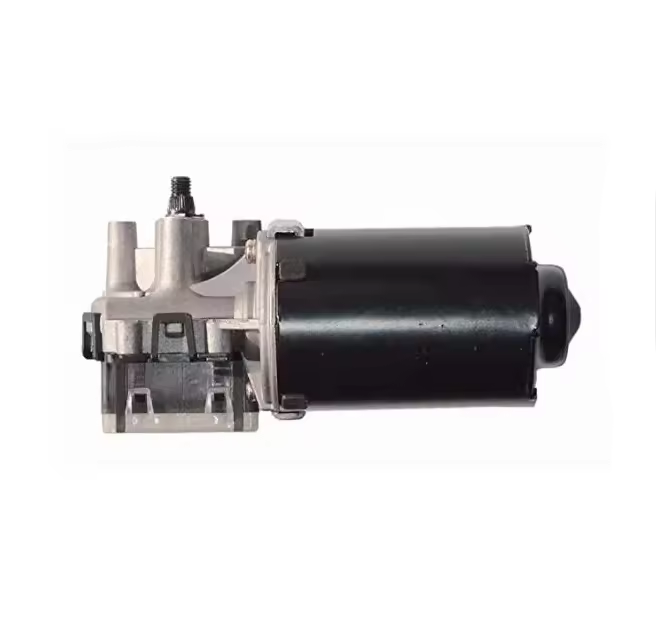
7 Warning Signs Your Wiper Motor Is Failing
1. Wipers Move Slower Than Normal
One of the earliest and most commonly ignored warning signs is a noticeable drop in wiper sweep speed. If you switch to the high-speed setting and the blades still crawl across the windshield, the motor is likely struggling to draw the current it needs.
Why it happens: Carbon brush wear inside the motor increases electrical resistance over time. As brushes erode, the motor can no longer convert full voltage into rotational torque, resulting in reduced sweep speed at all settings.
What to do: Test the motor's current draw with a multimeter. A healthy 12 V Wiper Motor typically draws 3–4 A at low speed and 5–7 A at high speed. Readings significantly outside these ranges point to brush wear or armature damage. If the motor is more than four years old and showing this symptom, replacement is more cost-effective than repair.
2. Wipers Stop in the Middle of the Windshield
If your wipers freeze mid-sweep and refuse to return to their park position — or stop randomly partway through a stroke — the wiper motor's internal park-position switch is likely at fault.
Why it happens: The park switch is a small internal relay that tells the motor where to stop. When it fails, the motor loses its reference point and stalls in whatever position it happens to be in when power is removed.
What to do: Do not leave wipers parked mid-screen in cold weather — ice can lock the linkage and burn the motor out entirely. Replace the motor as soon as this symptom appears. Ensure the replacement unit includes a correctly calibrated park-position switch; many budget aftermarket parts omit or poorly implement this component.
3. Wipers Do Not Move at All
Complete wiper failure is the most obvious sign, but it is important to diagnose the root cause correctly before replacing the motor. The wiper system includes a fuse, a relay, a switch, a linkage, and the motor itself — failure at any point produces the same symptom.
Why it happens: Internal motor seizure (caused by a burned armature winding), a blown fuse from a momentary overload, or a failed relay are the most common causes of total wiper stoppage.
What to do: Check the fuse first — it is the cheapest fix. If the fuse is intact, use a test light or multimeter to confirm 12 V is reaching the motor connector when the stalk is operated. If power is present but the motor does not run, the motor itself has failed and must be replaced.
4. You Hear a Humming or Grinding Noise
A wiper motor that hums loudly without producing blade movement, or that grinds during each sweep cycle, is communicating a mechanical failure clearly. Do not ignore it.
Why it happens: Humming without movement usually means the motor is receiving power but cannot overcome a seized gear train — often caused by corrosion or a stripped worm gear. Grinding during movement indicates worn or damaged gear teeth inside the gearbox housing.
What to do: Disconnect the Wiper Linkage from the motor output shaft and operate the motor briefly in isolation. If it runs freely without the linkage, the problem is in the linkage mechanism rather than the motor. If it still grinds or hums, the motor-gearbox assembly needs replacement.
5. Wipers Work Intermittently
Wipers that work fine one day and fail the next — only to mysteriously recover — are displaying a classic symptom of an intermittent electrical fault inside the motor or its harness connector.
Why it happens: Thermal expansion and contraction can cause a hairline crack in an armature winding to open and close depending on temperature. Corroded or loose connector pins produce the same effect, especially in humid climates.
What to do: Inspect the motor connector for green corrosion or pushed-back terminals. Clean and re-seat the connector. If the intermittent fault continues, the motor itself has an internal winding crack and requires replacement. Operating a vehicle with unreliable wipers fails roadworthiness standards in most markets.
6. The Wiper Blades Streak or Skip Despite New Blades
This symptom is easy to misdiagnose. Many drivers replace the rubber blade inserts repeatedly, never resolving the problem — because the actual fault is incorrect sweep speed caused by a degrading motor, not worn rubber.
Why it happens: A motor operating below its rated torque output sweeps at inconsistent speed, causing the blade to lift slightly off the glass at the top of the stroke. This produces streaking and skipping that perfectly new blades cannot cure.
What to do: Fit a fresh set of quality blade inserts first. If streaking persists and the glass is clean, measure motor sweep speed against the vehicle's specification. Inconsistent speed under load confirms motor degradation.
7. Wiper Fluid Is Dispensed But Blades Do Not Move
Some vehicles share a control relay between the washer pump and the wiper motor. If fluid sprays normally but the blades remain stationary, the motor has likely failed independently of the wash circuit.
Why it happens: The washer pump draws very little current compared to the wiper motor. A relay or fuse that has degraded to the point of dropping too much voltage for the motor may still pass enough current to operate the pump.
What to do: This is a useful diagnostic clue, not a solution. Confirm motor power supply as described in Sign 3, then proceed to motor replacement if the motor is confirmed to be receiving power without responding.
When to Replace — Not Repair
Wiper motors are relatively low-cost components compared to the labour time involved in accessing them on many vehicle platforms. For any motor showing two or more of the symptoms above, or for any motor that is more than five years old with over 100,000 km of service, replacement is the more economical and reliable decision.
When sourcing a replacement, look for motors that:
- Cross-reference your vehicle's OEM part number exactly
- Are manufactured under IATF 16949 or ISO/TS 16949 quality management systems
- Carry CE certification if being imported into European markets
- Include a minimum 12-month warranty with 100% pre-shipment testing
Let JX Automotive Find Your OEM Match
At JX Automotive, we have manufactured wiper motors since 1990, with a catalogue of 1,000+ SKUs covering 12 V and 24 V applications across European, Asian, and American platforms. Every unit passes 100% functional inspection before leaving our 15,000 m² facility in Zhejiang.
Ready to replace a failing wiper motor? Send us your vehicle make, model, year, and OEM part number — our team will confirm fitment and provide a competitive quote within 24 hours.
📧 Contact us at www.jxautomotive.com or submit your OEM number via the product enquiry form.
Frequently Asked Questions
Q: Can I drive with a failing wiper motor? A: Only in dry weather for very short distances. In rain, snow, or heavy mist, a non-functional wiper system is a serious safety hazard and may constitute a legal violation in most jurisdictions.
Q: How long does a wiper motor typically last? A: A quality OEM or OEM-equivalent wiper motor typically lasts 8–12 years or 150,000–200,000 km under normal operating conditions. Premature failure is usually caused by water ingress, electrical overload from a seized linkage, or substandard motor windings.
Q: Is it safe to lubricate a wiper motor myself? A: The motor gearbox is a sealed unit and should not be opened or lubricated by non-specialists. Wiper pivot points and linkage joints can be lubricated with silicone grease, which may reduce the load on the motor and extend its service life.
Q: How do I find the right replacement part number? A: Check the existing motor housing for a stamped OEM number, consult your vehicle's parts catalogue, or visit jxautomotive.com and search by make/model/year.
Q: What is the difference between a front and rear wiper motor? A: Front wiper motors are larger, operate a two-blade linkage, and typically run at two or three speeds. Rear wiper motors are more compact, operate a single blade, and are usually single-speed. They are not interchangeable between positions.
Internal Link Suggestions
- Link "1,000+ SKUs" →
/wiper-motor/category page - Link "OEM part number" in the CTA →
/wiper-motor/product listing - Link "CE certification" → company certifications/about page